
The classic Spiti Valley road trip is a loop: you go in from Shimla through Kinnaur, climb gradually to Kaza, then cross Kunzum Pass to Chandratal and come out at Manali through the Atal Tunnel. Done in that direction over nine or ten days, it is the safest way to acclimatise and the most rewarding way to see the valley. The full circuit is usually possible only from about mid-June to early October, when the Kunzum side is open.
Spiti circuit at a glance
| Detail | What to expect |
|---|---|
| Route | Delhi → Shimla → Narkanda → Kalpa → Nako → Tabo → Kaza → Chandratal → Manali → Delhi |
| Ideal duration | 9–10 days from Delhi for the full circuit |
| Highest point | Kunzum Pass, about 4,551 m |
| Chandratal lake | About 4,250–4,300 m |
| Full-circuit season | Roughly mid-June to early October (Kunzum side) |
| Shimla-side access | Open for most of the year, subject to landslides and snow |
| Permits | None for Indian citizens; foreigners need an Inner Line Permit |
| Best for | Friends, couples, photographers, families with older children |
Why go Shimla first, Manali last?
Spiti sits high. Kaza, the main town, is well above 3,600 m, and villages like Langza, Hikkim and Komic are higher still. If you enter from Manali, you cross Kunzum and reach Chandratal or Kaza within a day or two, which is a big jump in altitude. Entering from Shimla, you climb slowly: Narkanda, then Kalpa in Kinnaur, then Nako and Tabo, and only then Kaza. Your body gets several nights to adjust before the highest stretches. That is why we run the circuit clockwise, and why most experienced drivers recommend it.
Best time for a Spiti Valley road trip
- Mid-June to September: The full circuit season. Kunzum Pass and the Batal–Gramphu road usually open in June after snow clearance, and the Chandratal campsites run through summer. Days are sunny, nights are cold.
- July and August: Spiti itself gets little rain, but the monsoon can trigger landslides in Kinnaur and on the approach roads. Build in a buffer day.
- September to early October: Clear skies, golden fields and fewer vehicles. Arguably the best window, though nights get properly cold and the first snow can close Kunzum at short notice.
- Winter (roughly November to May): The Kunzum side is closed. Spiti can still be reached from Shimla through Kinnaur, which is how winter expeditions run, but you return the same way.
Opening and closing dates change every year with snowfall, so always check the current road status before you travel.
Getting there from Delhi and other cities
Most travellers start in Delhi. Take an overnight Volvo to Shimla, or travel with a private vehicle from Delhi or Chandigarh. From other cities, fly into Delhi or Chandigarh. The route home runs from Manali back to Delhi by overnight Volvo or cab, so you do not repeat any road.
For Spiti itself, travel in a sturdy vehicle with good ground clearance, driven by someone experienced on mountain roads. SUVs and tempo travellers both work; the driver matters more than the badge.
Day-by-day Spiti Valley circuit
This follows our Lahaul & Spiti + Chandratal 9N/10D itinerary, which begins after you reach Shimla from Delhi.
- Shimla → Narkanda: A short first day through apple country to Narkanda, a hill town surrounded by forests.
- Narkanda → Kalpa: Along the Sutlej through Rampur into Kinnaur. Kalpa faces the Kinner Kailash range and is a lovely first night in the high country.
- Kalpa → Nako → Tabo: The landscape turns stark. Stop at the lake village of Nako, then continue to Tabo, home to one of the oldest monasteries in the Himalaya.
- Tabo → Dhankar → Kaza: Visit Dhankar, perched on a cliff above the confluence of the Spiti and Pin rivers, then drive on to Kaza.
- Kaza → Key → Kibber → Chicham: Key Monastery, the high village of Kibber, and the Chicham bridge over a deep gorge.
- Langza → Hikkim → Komic: The high villages above Kaza: fossils and the Buddha statue at Langza, the famous post office at Hikkim, and the monastery at Komic.
- Kaza → Kunzum Pass → Chandratal: Cross Kunzum Pass and reach Chandratal, the crescent-shaped lake. The last stretch to the lake is a short walk from the parking area.
- Chandratal → Batal → Sissu: The roughest road of the trip, via Batal and Chhatru to the Lahaul side and down to Sissu.
- Sissu → Manali: Through the Atal Tunnel to Manali for a comfortable night.
- Manali → departure: Overnight Volvo or cab back to Delhi.
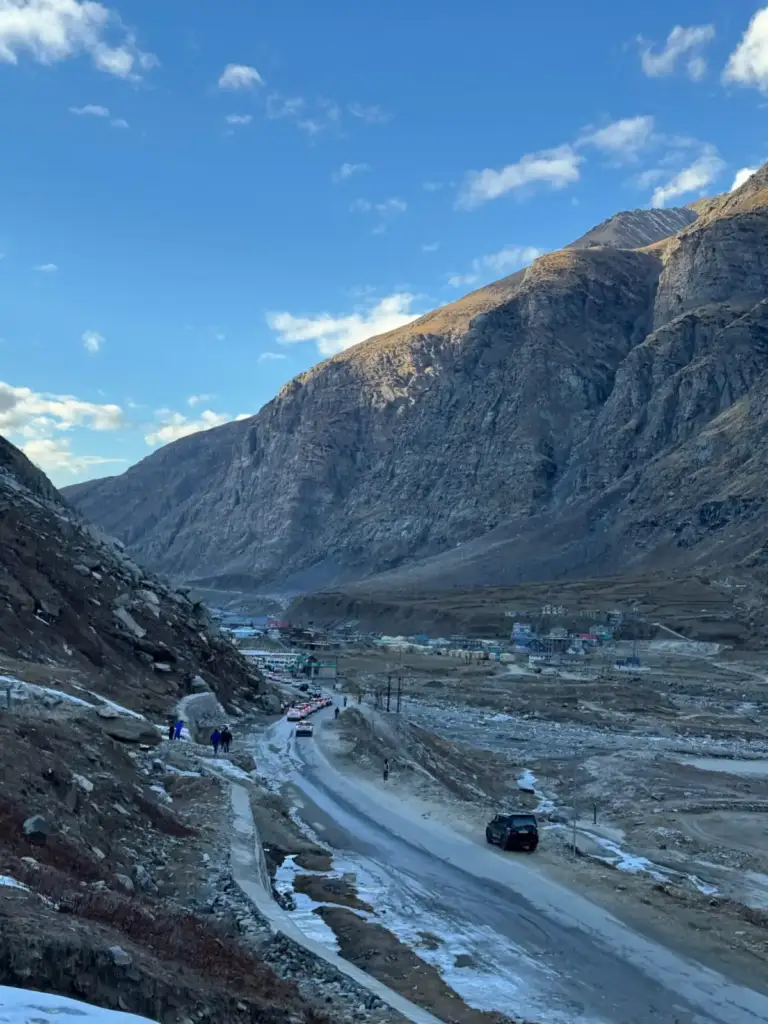
Short on time? Our 7N/8D Spiti Valley trip covers Kinnaur, Tabo, Kaza, the high villages and the Chandratal / Kunzum region, then returns. In late winter and spring, our Lahaul–Spiti Winter Expedition goes in and out through Kinnaur with a buffer day for weather.
Permits: Indians vs foreigners
Indian citizens
Indian citizens do not need a permit for Kinnaur or Spiti. Carry a government photo ID for every traveller and your vehicle papers. Police checkposts on the route, such as those near Jangi and Sumdo, may ask you to register your details; it usually takes a few minutes.
Foreign nationals
Foreigners need an Inner Line Permit for the protected stretch of upper Kinnaur and Spiti, roughly between the Pooh area and Kaza, including places like Nako and Tabo. Lower Kinnaur towns such as Kalpa and Sangla are outside it. The permit is issued by district and sub-divisional offices, including those at Shimla, Reckong Peo and Kaza, and has generally required an in-person application with passport and visa copies and an itinerary. Group-size requirements and fees change, so confirm the current rules with the issuing office or your trip planner before travelling.
Acclimatisation and health
- Go slow: The Shimla-first route builds in gradual gain. Resist the urge to skip nights.
- Know the signs of altitude sickness: headache, nausea, loss of appetite, poor sleep and unusual tiredness. Tell your group leader early.
- Do not climb higher with symptoms: rest where you are, and descend if things get worse.
- Drink water, avoid alcohol for the first days at altitude, and dress in layers.
- Talk to your doctor before the trip if you have heart, lung or blood-pressure conditions, or are considering preventive medicine.
Road conditions and practical tips
Expect everything from smooth highway to broken gravel. The Kinnaur stretch has narrow sections cut into cliffs and is prone to landslides in the monsoon. The Kunzum–Batal–Gramphu road is the roughest, with water crossings that are strongest in the afternoon, so drivers try to cross in the morning.
- Fuel: Pumps are few and far apart. Top up at Reckong Peo or Kalpa, and again at Kaza.
- Network: Mobile signal is patchy; BSNL and Jio tend to work in larger villages. Share your itinerary with family.
- Cash: ATMs are limited to a few towns. Carry enough cash.
- Driving: Avoid driving after dark and keep a spare day in hand.
- Pack: Warm layers even in summer, a down jacket for Chandratal, sunscreen, sunglasses, lip balm, a basic medical kit and a refillable bottle.

What affects the cost
We price Spiti trips on enquiry because the cost depends on choices that differ from group to group:
- Number of days and whether you do the full circuit or an in-and-out route
- Vehicle type and group size (shared costs fall per head as the group grows)
- Stay category: homestays, guesthouses, hotels or camps at Chandratal
- Meal plan and any add-ons, such as extra nights in Kaza
- Season and travel dates
Plan your Spiti Valley road trip with Mountain’s Greet
We are a Shimla-born team, and Spiti via Kinnaur starts right on our doorstep. We plan the circuit for solo travellers on group departures, couples, friends, families, college groups and clubs, usually starting from Delhi with an overnight journey to Shimla. Local drivers who know these roads, homely stays, and a written list of inclusions and exclusions come as standard. See photos from our trips in the gallery, or check the Himachal Pradesh Tourism site for general state travel information.
When you are ready, enquire about the Lahaul & Spiti + Chandratal circuit, or prefer the shorter Spiti Valley 7N/8D trip. Questions? Message us on WhatsApp.
FAQs
How many days do I need for a Spiti Valley road trip?
Plan nine to ten days from Shimla for the full circuit via Kinnaur, Kaza and Chandratal to Manali, plus travel from Delhi. Seven to eight days works for a shorter route.
Should I start the Spiti circuit from Shimla or Manali?
Start from Shimla. The altitude rises gradually through Kinnaur, giving your body time to acclimatise before Kaza and Kunzum Pass.
Do Indians need a permit for Spiti Valley?
No. Indian citizens need only a valid photo ID and vehicle papers, though you may be asked to register at police checkposts on the way.
When is Chandratal open?
Chandratal is usually reachable from around June to early October, depending on when Kunzum Pass and the Batal road open and close. Check the current status before travelling.
Can I visit Spiti in winter?
Yes, via Shimla and Kinnaur, as the Kunzum side is closed. Winter trips need warm gear, flexible plans and buffer days for snow.
Is a Spiti road trip safe for families?
It can be, with an experienced driver and a slow itinerary. It suits families with older children who are comfortable with long drives and basic stays.
More guides
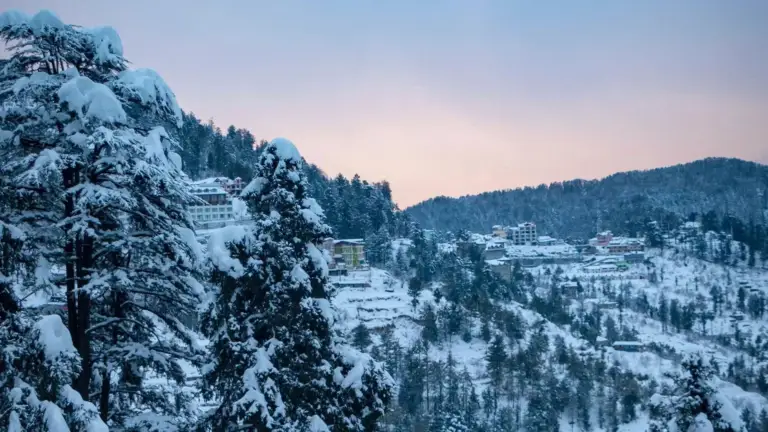
Shimla Manali Tour Package from Delhi: A 6-Day Itinerary Guide
A practical 6-day Shimla–Manali plan from Delhi: Volvo or private cab, day-by-day route, snow season, Atal Tunnel and Solang, and what a good package should include.
Read the guide →
Leh Ladakh Road Trip: Routes, Permits and Day-by-Day Plan
Everything you need for a Leh Ladakh road trip via Manali: start options, a day-by-day route to Nubra and Pangong, permits, AMS, and bike vs 4x4 vs traveller.
Read the guide →
Char Dham Yatra Guide: Route, Registration, Season and Days
Everything you need to plan the Char Dham Yatra from Haridwar or Delhi: route and order, season, mandatory registration, Kedarnath options and how many days to keep.
Read the guide →