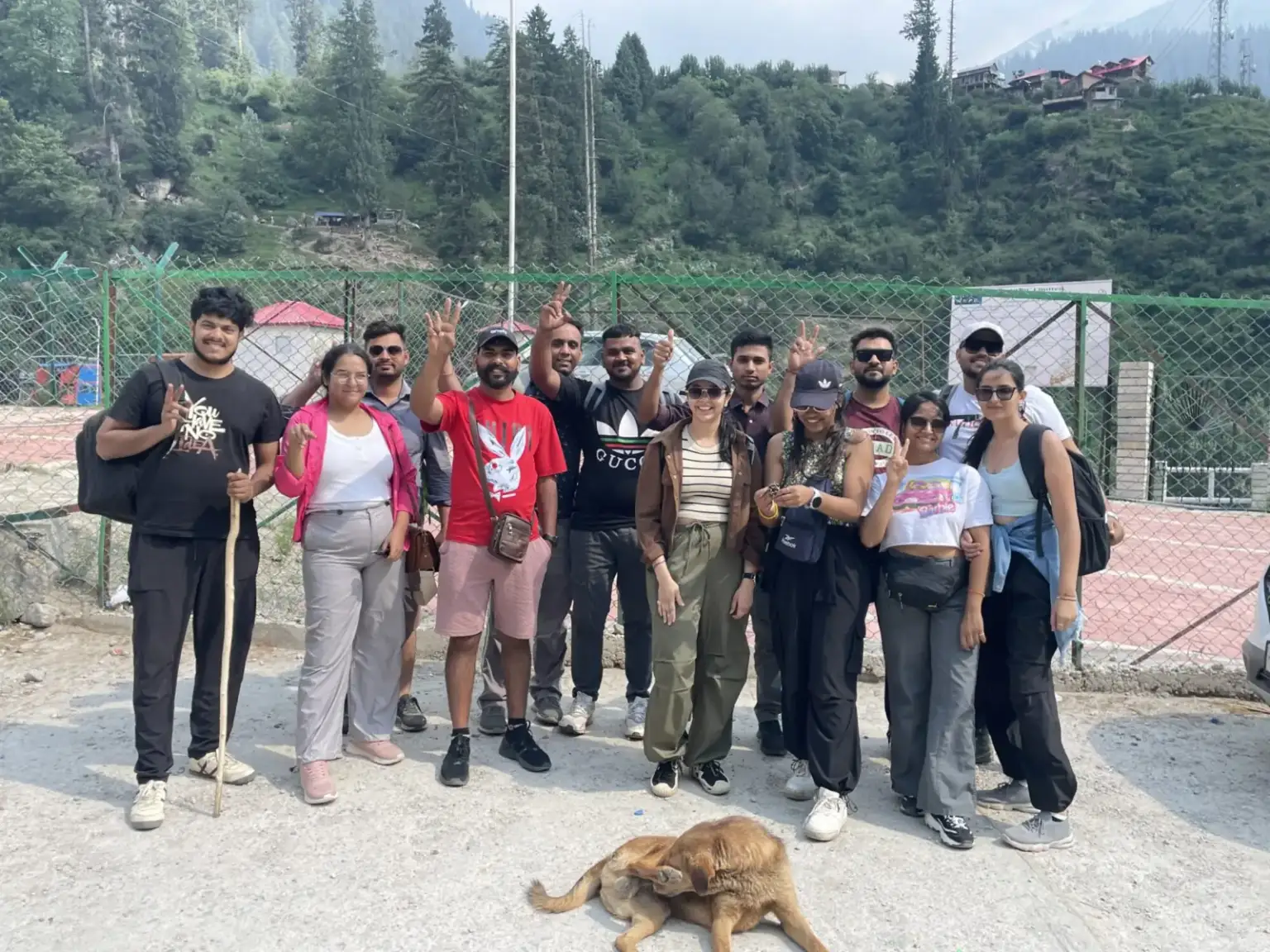
The best treks near Delhi for beginners are Triund, Shali Tibba, Chandrashila via Tungnath, Dayara Bugyal, Beas Kund and Kedarkantha. Each one starts from a base town you can reach overnight from Delhi by Volvo or cab, needs no technical climbing, and fits into a long weekend or a short week of leave.
Below is how they compare, how to reach each base, when to go and what “easy” really means on each trail, so you can pick the right first Himalayan trek.
Quick facts
| Detail | At a glance |
|---|---|
| Treks covered | Triund, Shali Tibba, Chandrashila (Tungnath), Dayara Bugyal, Beas Kund, Kedarkantha |
| Base towns | McLeod Ganj/Dharamkot, Shimla, Rishikesh (for Chopta), Dehradun (for Barsu and Sankri), Manali |
| Days on the ground | 2 to 5 days, plus overnight travel from Delhi |
| Highest point | From about 2,850 m (Triund) to about 3,800 m (Kedarkantha) |
| Difficulty | Easy to easy-moderate; basic fitness needed |
| Good for | First-timers, friends, families with active teenagers, college and office groups |
How the six treks compare
| Trek | Base from Delhi | Approx. highest point | Best season |
|---|---|---|---|
| Triund | McLeod Ganj / Dharamkot | About 2,850 m | Mar–Jun, Sep–Dec |
| Shali Tibba | Shimla | About 2,860 m | Year-round; snow Dec–Feb |
| Chandrashila (Tungnath) | Rishikesh → Chopta | Tungnath 3,680 m; summit a little higher | Year-round; snow Dec–Mar |
| Dayara Bugyal | Dehradun → Barsu | About 3,600 m | Year-round; snow Dec–Mar |
| Beas Kund | Manali | About 3,700 m | May–Oct |
| Kedarkantha | Dehradun → Sankri | About 3,800 m | Dec–Apr for snow |
Altitudes are rounded, because different surveys and operators publish slightly different figures.
1. Triund: the classic weekend trek
Triund is a grassy ridge above McLeod Ganj with a close-up view of the Dhauladhar range. The trail climbs through oak and rhododendron forest past Galu Devi temple, and the last stretch is a set of steep, rocky switchbacks. From Galu Devi it is roughly 6 km one way, and most people take four to five hours to go up.
How to reach from Delhi: McLeod Ganj is roughly 475 km away. Overnight Volvo buses leave Delhi in the evening and take around 10 to 12 hours. Dharamkot is a short drive or walk above McLeod Ganj.
Good to know: Camping at the top is controlled by the forest department and the rules have changed more than once in recent years, so check the current position before you plan an overnight stay. Our Triund with Dharamkot trip is a two-day plan: trek up for sunset, then sunrise over the Dhauladhars and back down.
2. Shali Tibba: a quiet summit near Shimla
If you want a trek without the crowds, Shali Tibba is a good pick. It is a stand-alone peak topped by a Bhima Kali temple. The walk starts at Khatnol village, a drive of roughly 36 to 48 km from Shimla depending on the road you take, and climbs about 7 km through oak and deodar to the top. You can do it in a single day.
How to reach from Delhi: Shimla is roughly 350 km by road; overnight buses run from Delhi, or you can take a train to Kalka and continue by road. For more on the region, see Himachal Tourism.
Good to know: Winter brings snow to the upper trail, which makes it prettier and slower. We pair it with Mashobra and the Naldehra meadows in a relaxed two-day plan.

3. Chandrashila via Tungnath: big views, short climb
This trek gives you one of the widest mountain panoramas in Garhwal for relatively little effort. From the Chopta meadows a stone-paved path climbs to Tungnath, one of the Panch Kedar temples at about 3,680 m. Chandrashila is the rocky summit a short, steep climb beyond the temple, and published heights for it vary, so treat any single number with caution.
How to reach from Delhi: Go to Rishikesh first (about six to seven hours by road). Chopta is roughly 162 km further, via Rudraprayag and Ukhimath, which takes most of a day on mountain roads.
Good to know: Tungnath temple stays closed for roughly six months in winter, but the trail itself is often walked in snow from December to March. Summit sunrise is the reason to go, so expect an early start.
4. Dayara Bugyal: India’s easiest high meadow
Dayara Bugyal is a huge alpine meadow in Uttarkashi district, rising from around 2,600 m to over 3,600 m. The route from Barsu village passes Barnala Tal, a small lake in an oak forest, before opening onto the grasslands. The gradients are gentle, which makes it one of the kindest first treks you can choose.
How to reach from Delhi: Travel to Dehradun overnight, then drive to Barsu near Uttarkashi, a journey of several hours on hill roads.
Good to know: In winter the meadows turn into a wide snowfield; in spring you get green grass and rhododendrons. Bakaria Top adds a short, sharper climb with a full circle of peaks.
5. Beas Kund: glacier country above Manali
Beas Kund is a glacial lake at around 3,700 m and the source of the Beas river. The trek starts at Dhundi near Solang, about 15 km from Manali, and camps at Bakarthach meadow, roughly 20 km in total over three days. You walk beside the river, over moraine and under the peaks of the Pir Panjal.
How to reach from Delhi: Manali is about 530 km from Delhi, typically 12 to 14 hours by overnight Volvo.
Good to know: Snow can linger into early summer, so May and October treks can be colder and slushier than midsummer ones.
6. Kedarkantha: the step up
Kedarkantha is the most demanding trek on this list and the one to pick once you know you enjoy trekking. It is famous as a winter trek, with snow-covered forest camps, a frozen Juda Ka Talab and a pre-dawn summit push to about 3,800 m. Most operators rate it easy-moderate.
How to reach from Delhi: Reach Dehradun overnight, then drive about 200 km to Sankri, a full day on the road. Our Kedarkantha Peak trip runs from December to April, when the snow is at its best.
Which one should you choose?
- Only a weekend: Triund or Shali Tibba.
- First time above 3,500 m: Dayara Bugyal or Chandrashila.
- Want snow for sure: Kedarkantha, Dayara or Chandrashila between December and March.
- Summer holidays: Beas Kund, which is at its best from late May.
- Mixed-age family group: Shali Tibba or Dayara Bugyal, where the pace can stay gentle.
Difficulty and fitness: what “beginner” means
None of these treks needs ropes or climbing skills, but all of them involve four to seven hours of walking on some days, often uphill, sometimes in snow. Beginner-friendly means the trail is well used and there are no exposed sections, not that it is flat.
Start preparing four to six weeks before you go:
- Brisk walking or jogging four to five days a week, building up to 5 km in 35 to 40 minutes.
- Stair climbing with a light backpack.
- Squats and lunges for the long descents, which are harder on the knees than the climbs.
Above 3,000 m, altitude matters more than fitness. Walk slowly, drink plenty of water and tell your trek leader early if you have a headache, nausea or unusual breathlessness. If you have a medical condition, speak to your doctor before booking.
What to pack for your first trek
- Trekking shoes with good grip, already broken in.
- Layers: thermal inner, fleece and a padded or down jacket for evenings.
- Rain jacket or poncho, and a backpack cover.
- Woollen cap, gloves, sunglasses and sunscreen, as UV is strong at altitude.
- A trekking pole, especially for Kedarkantha and Chandrashila descents in snow.
- Water bottle, head torch and a small personal medical kit.
- Original government photo ID, which forest check posts often ask for.
What affects the cost
Trips are priced on enquiry, because the number depends on your plan. The main factors are:
- Travel from Delhi: overnight Volvo, train or a private cab for the group.
- Number of trek days and nights in camps or homestays.
- Group size, since transport and guide costs are shared.
- Season, as winter treks need more gear and snow-ready camps.
- Forest permits and entry charges, which vary by area.
- Add-ons such as porters for personal bags or extra nights in the base town.
Planning a beginner trek with Mountain’s Greet
Mountain’s Greet began in Shimla and now plans treks across Himachal and Uttarakhand. Most of our beginner treks start and end in Delhi, with an overnight Volvo or private cab to the base town.
We plan for solo travellers joining group departures, couples, families, friend circles, colleges and schools, and corporate teams. You get local guides, simple and homely stays, and a written quote that lists exactly what is included and what is not. You can see day plans on our itinerary page and photos from past groups in our gallery.
Not sure which trek suits your group? Send us your dates and group size on WhatsApp and we will suggest the best fit.
FAQs
Which is the easiest Himalayan trek near Delhi?
Triund and Shali Tibba are the easiest, as both can be done in a day or two from McLeod Ganj and Shimla. Dayara Bugyal is the easiest option that takes you above 3,500 m.
Can I do a Himalayan trek from Delhi over a weekend?
Yes. Leave Delhi on a Friday night bus, trek Triund or Shali Tibba over Saturday and Sunday, and return overnight to reach Delhi on Monday morning.
Is Kedarkantha suitable for beginners?
Most operators rate it easy-moderate and suitable for fit beginners. The summit day is long and often in snow, so prepare with a few weeks of regular cardio.
What is the best month for a first trek from Delhi?
April to June and September to November suit most treks on this list. For snow, choose December to March and pick Kedarkantha, Dayara Bugyal or Chandrashila.
Do I need a permit for these treks?
Many trails pass through forest areas where a forest permit or entry charge applies, and rules change from year to year. Carry original photo ID. When you plan with us, your written quote states which permits and fees are included.
More guides

Kedarkantha Trek Guide: Itinerary, Best Time, Difficulty and Packing
Everything you need for the Kedarkantha trek: getting to Sankri from Delhi, the 5-day route, snow season, difficulty, permits and what to pack.
Read the guide →
Hampta Pass Trek Guide: Manali Route, Chandratal and Best Months
Cross from green Kullu into stark Lahaul on the Hampta Pass trek. Route, Chandratal, best months, difficulty and how to reach Manali.
Read the guide →
Valley of Flowers Trek Guide: Route, Bloom Season and Hemkund Sahib
Plan the Valley of Flowers trek: the Govindghat–Ghangaria route, peak bloom months, entry rules, Hemkund Sahib and how to get there from Delhi.
Read the guide →