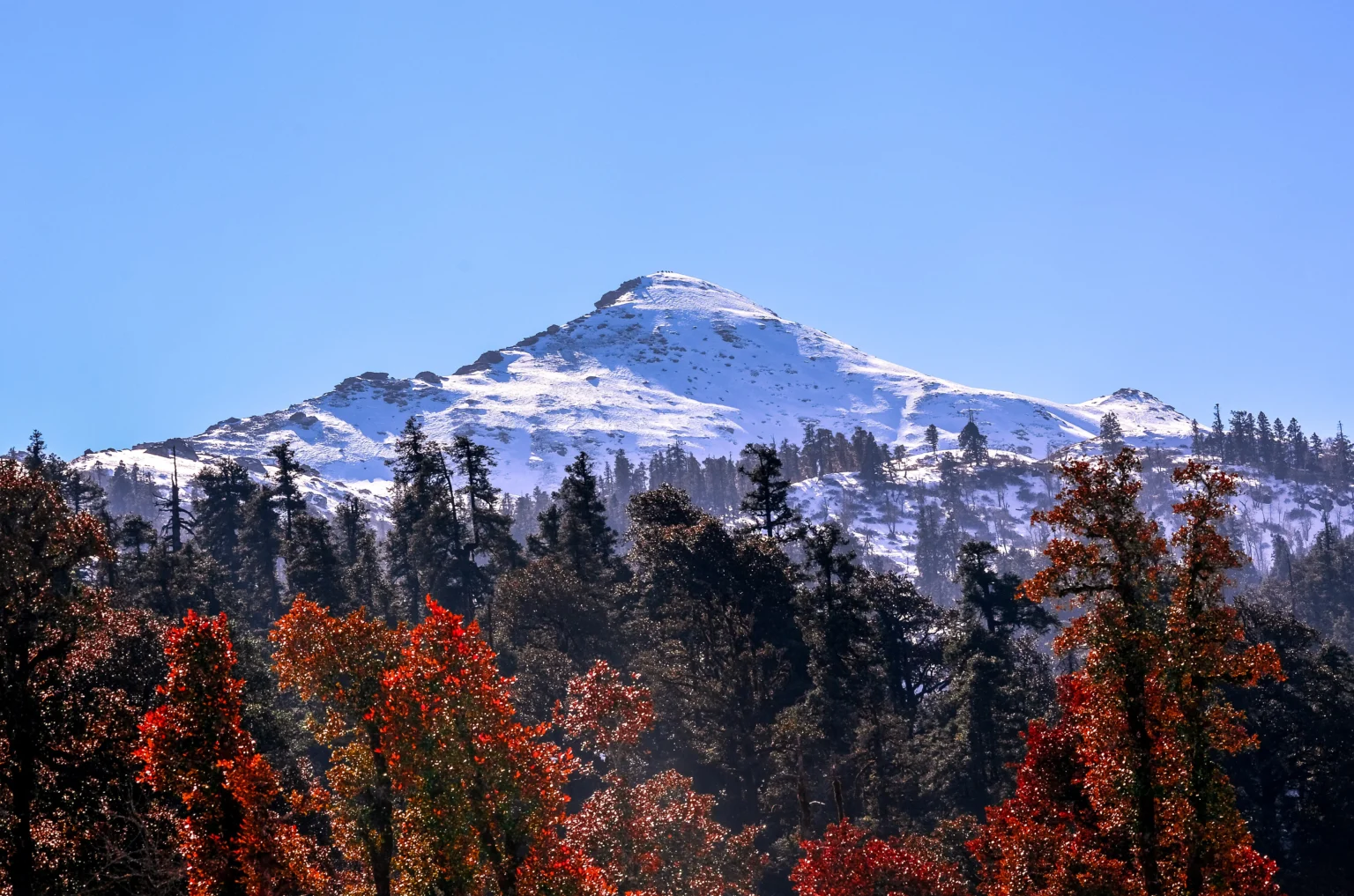
The Kedarkantha trek is a 5-day snow trek in Uttarakhand’s Uttarkashi district that climbs from Sankri village to a summit of about 3,800 m (12,500 ft). It is easy-moderate, covers roughly 20 km on foot, and is at its best between December and April, when the forest camps and summit are under snow.
This guide covers the route from Delhi, a day-by-day plan, the best time to go, how hard it really is, what to pack and what decides the cost.
Kedarkantha trek quick facts
| Detail | Information |
|---|---|
| Location | Govind Pashu Vihar National Park area, Uttarkashi district, Uttarakhand |
| Summit altitude | About 3,800 m (12,500 ft) |
| Base village | Sankri, about 1,950 m |
| Trek distance | Roughly 20 km over four walking days |
| Duration | 5 days from Sankri, plus travel to and from Delhi |
| Difficulty | Easy-moderate; suitable for fit beginners |
| Best season | December to April for snow |
| Nearest airport / railhead | Jolly Grant Airport and Dehradun railway station |
Why Kedarkantha is so popular
Very few Himalayan treks let a first-timer stand on a real summit in deep winter. Kedarkantha does. The trail runs through pine and oak forest, past a lake that often freezes over, and up to open slopes with views across the Garhwal peaks. Campsites are spacious and sheltered, the gradients are steady rather than punishing, and the summit is reached on a single early-morning push.
That combination is why it is often called the queen of winter treks, and why it is a natural next step after an easy weekend trek such as Triund.
Best time for the Kedarkantha trek
- December to February: peak winter. Heavy snow, cold nights, and the classic snow-trek experience. Days are short and camps can drop well below freezing.
- March and April: snow is still on the upper trail and summit, but days are warmer and longer. A good choice if you want snow with a little more comfort.
- May, June, September to November: the trail is walked in these months too, without snow, with green forest and clear autumn views.
- July and August: monsoon. Most operators avoid these months because of rain and road trouble.
Our Kedarkantha Peak departures run from December to April, because snow is what most people come for.
How to reach Sankri from Delhi
The journey has two legs.
- Delhi to Dehradun: about 250 km. Take an overnight Volvo, an overnight train, or drive. You can also fly into Jolly Grant Airport near Dehradun.
- Dehradun to Sankri: roughly 200 to 220 km on mountain roads through Mussoorie, Nowgaon, Purola and Mori, a drive of around 9 to 10 hours. Leave Dehradun early in the morning.
Travellers from Chandigarh, Punjab or Himachal can also join the road at Dehradun. Shared taxis and buses do run towards Sankri, but a booked vehicle is far more reliable, especially in winter when snow can close the last stretch.

Kedarkantha trek itinerary: day by day
This is the plan we follow on our trip. Timings and campsites can shift with snow and weather.
Day 1: Arrive at Sankri
Drive from Dehradun to Sankri and settle in. In the evening there is a briefing on the route, layering, safety and how the summit day works. Sankri is a small village with a view of the Swargarohini range on clear evenings.
Day 2: Sankri to Juda Ka Talab (about 2,800 m)
The trail climbs steadily through pine and oak forest to Juda Ka Talab, a small lake that is often frozen in winter. It is a short day, which helps your body start adjusting to altitude.
Day 3: Juda Ka Talab to Kedarkantha Base (about 3,100 m and above)
Another short, steady climb through the forest takes you to the base camp in a clearing. The summit ridge is visible from here. Rest, eat well and get to bed early.
Day 4: Summit day and descent to Hargaon
You start well before dawn with head torches and climb the snow slopes to the summit at about 3,800 m, ideally in time for sunrise. The last section is the steepest part of the trek. After time at the top, descend to Hargaon camp (about 2,700 m). This is the longest day.
Day 5: Hargaon to Sankri and depart
An easy descent through the forest brings you back to Sankri, from where the drive to Dehradun begins.
How difficult is the Kedarkantha trek?
Kedarkantha is rated easy-moderate. Days two, three and five are short, often four to five hours of walking. Summit day is the real test, with an early start, a steep final climb in snow and a long descent.
Cold is the other challenge. In December and January, nights at the higher camps are well below freezing, so good layers and a warm sleeping bag matter as much as fitness.
How to prepare:
- Start six weeks ahead with jogging, cycling or brisk walks at least four days a week.
- Aim to run 5 km in about 35 minutes, or walk it briskly with a loaded backpack.
- Add stairs, squats and lunges for the descents.
- If you have a heart, lung or blood pressure condition, get your doctor’s clearance first.
Permits and rules
The Kedarkantha area falls under the Govind Pashu Vihar National Park and Wildlife Sanctuary, and a forest permit is needed to trek here. Rangers can check permits and receipts along the trail. Every trekker should carry original government photo ID, and many operators also ask for a medical fitness form. Rules and fees are set by the forest department and can change, so confirm the current requirement before you travel. You can find general information on the Uttarakhand Tourism website.
Please carry all your waste back down. The forest camps stay beautiful only if every group leaves them clean.
What to pack for Kedarkantha
- Trekking shoes with ankle support and deep grip, plus micro-spikes or gaiters for snow.
- Three warm layers: thermal inner, fleece, and a padded or down jacket.
- Waterproof outer jacket and trekking pants; avoid jeans.
- Woollen cap, balaclava or buff, waterproof gloves and warm socks (two to three pairs).
- UV-protection sunglasses. Snow glare can cause snow blindness.
- Sunscreen, lip balm and a cold cream.
- Head torch with spare batteries for summit night.
- Two one-litre water bottles; an insulated one helps in winter.
- Trekking pole, a 40–50 litre backpack with a rain cover, and a small daypack for summit day.
- Personal medicines and original photo ID.
What affects the cost of the Kedarkantha trek
We price every trip on enquiry, because the right number depends on your plan. These are the main factors:
- Starting point: from Delhi (with overnight travel) or from Dehradun.
- Transport: shared vehicle, private cab or tempo traveller for the Dehradun–Sankri leg.
- Group size: larger groups share vehicle and guide costs.
- Stay: guesthouse or homestay in Sankri, and camps on the trail.
- Season: peak winter needs snow gear, warmer tents and extra support.
- Permits and fees: forest charges as applicable.
- Extras: porter for your personal bag, rental gear, or extra nights.
Plan your Kedarkantha trek with Mountain’s Greet
Mountain’s Greet started in Shimla and plans treks, holidays and road trips across India. For Kedarkantha, most of our groups start and end in Delhi, travelling overnight to Dehradun and on to Sankri by road.
We plan for solo travellers joining group departures, couples, families, friend groups, colleges and schools, and corporate teams. You trek with local guides, stay in homely guesthouses and camps, and get a transparent written quote that lists inclusions and exclusions. Read more about us, see all our routes on the itinerary page, or message us on WhatsApp with your dates and group size.
FAQs
How high is Kedarkantha peak?
Kedarkantha summit is about 3,800 m, usually quoted as 12,500 ft. Figures vary slightly between sources.
Is the Kedarkantha trek good for beginners?
Yes, for fit beginners. The daily distances are short, but summit day is long and often in snow, so train for a few weeks and bring proper winter layers.
When is snow guaranteed on Kedarkantha?
Nothing in the mountains is guaranteed, but December to March usually has good snow, and the summit often holds snow into April.
How far is Sankri from Dehradun?
Roughly 200 to 220 km by road, around 9 to 10 hours of driving through Mussoorie, Purola and Mori.
Do I need a permit for Kedarkantha?
Yes. The trek passes through the Govind Pashu Vihar protected area, so a forest permit is required and you should carry original photo ID. When you plan with us, your written quote states which permits and fees are included.
Can children do the Kedarkantha trek?
Active older children and teenagers often do it with their families, but the cold and the summit day are demanding. Speak to us about your group before you book, and check with your doctor if anyone has a health condition.
More guides

6 Best Treks Near Delhi for Beginners: Weekend to 5-Day Trips
Six beginner-friendly Himalayan treks you can do from Delhi, with how to reach each base, the best season and how hard they really are.
Read the guide →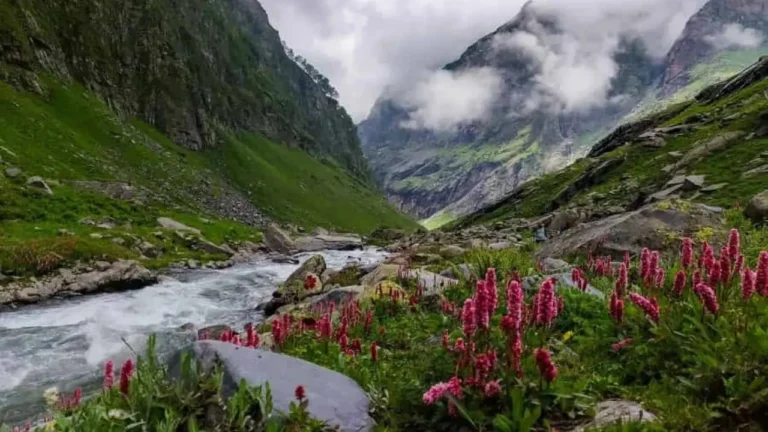
Hampta Pass Trek Guide: Manali Route, Chandratal and Best Months
Cross from green Kullu into stark Lahaul on the Hampta Pass trek. Route, Chandratal, best months, difficulty and how to reach Manali.
Read the guide →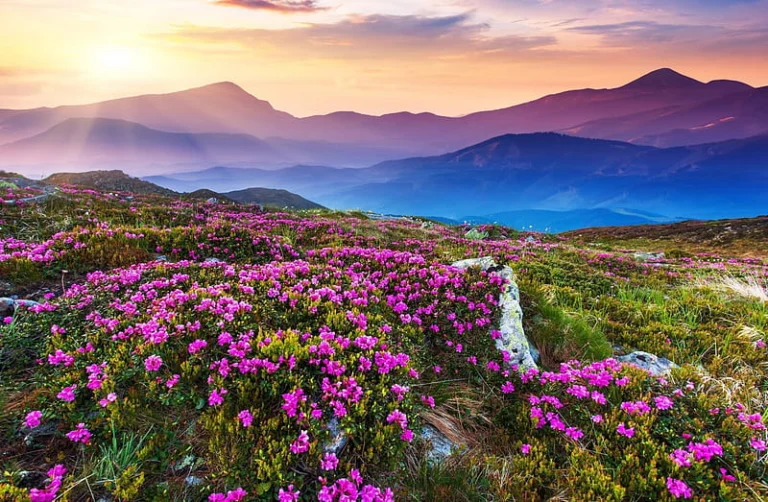
Valley of Flowers Trek Guide: Route, Bloom Season and Hemkund Sahib
Plan the Valley of Flowers trek: the Govindghat–Ghangaria route, peak bloom months, entry rules, Hemkund Sahib and how to get there from Delhi.
Read the guide →