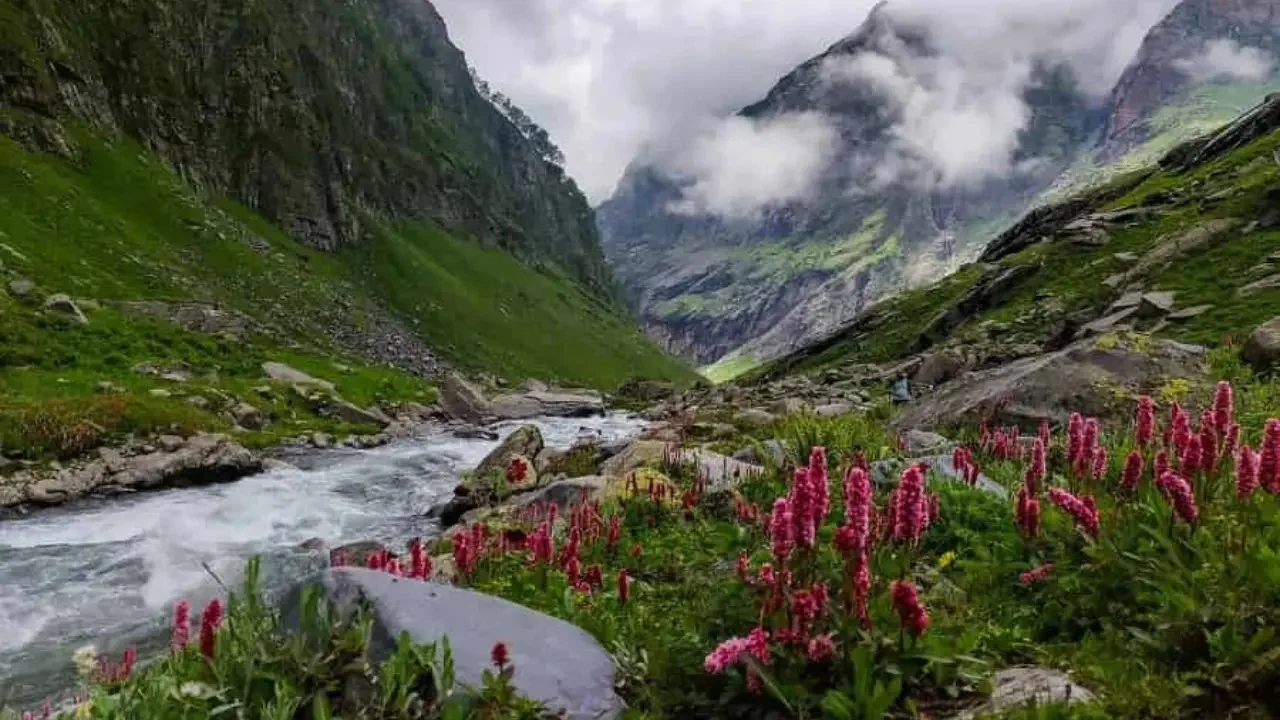
The Hampta Pass trek is a 5-day crossover trek from Manali that climbs through the green Kullu side and drops into the stark, dry Lahaul valley, crossing a pass at about 4,270 m (roughly 14,000 ft). It is rated moderate, runs from June to September, and is often combined with a drive to Chandratal lake on the way back.
Here is everything you need to plan it: how to reach Manali, the day-by-day route, the best months, difficulty, packing and what shapes the cost.
Hampta Pass trek quick facts
| Detail | Information |
|---|---|
| Location | Pir Panjal range, between Kullu and Lahaul, Himachal Pradesh |
| Highest point | Hampta Pass, about 4,270 m (roughly 14,000 ft) |
| Start / end | Jobra (near Manali) to Chatru in Lahaul |
| Trek distance | Roughly 26 km of walking |
| Duration | 5 days from Manali, including Chandratal |
| Difficulty | Moderate; fine for fit beginners |
| Best season | June to September |
| Base town | Manali |
What makes Hampta Pass special
Most short treks go up and come back the same way. Hampta Pass takes you across the mountains. For three days you walk up a valley full of meadows, streams and wildflowers. Then, from the top of the pass, you look down into Lahaul: brown slopes, grey moraine and almost no trees. The change happens within a few hours, and it is one of the most striking landscape shifts on any trek in India.
Add a night or an evening at Chandratal, the crescent-shaped lake at around 4,250 m, and you get two very different sides of Himachal in five days.
Best time for the Hampta Pass trek
- June: the season opens. Expect plenty of snow near the pass and on the Lahaul side, colder nights, and snow bridges over streams.
- July and August: the valley turns green and the wildflowers are out. This is monsoon in the lower hills, so rain on the drive to Manali is common, but the pass itself sits close to the rain shadow of Lahaul.
- September: clear skies, sharp views, and colder mornings. Many trekkers think this is the best month.
- October onwards: conditions turn harsh and roads in Lahaul can close, so most groups stop by the end of September.
Our Hampta Pass Trek runs from June to September.
How to reach Manali
From Delhi
Manali is roughly 530 km from Delhi. The usual choice is an overnight Volvo from Delhi, which takes around 12 to 14 hours depending on traffic and road work. You can also fly to Bhuntar (Kullu) airport and drive the last 50 km or so to Manali, or take a train to Chandigarh and continue by road.
From Chandigarh
Chandigarh to Manali is roughly 250 to 300 km, usually seven to nine hours by road via Kiratpur, Bilaspur and Mandi. Newer highway sections have cut the time on parts of this route.
Plan to reach Manali the evening before the trek, or on an early-morning bus, so you start Day 1 rested.
Hampta Pass trek itinerary: day by day
This is how our trip runs. Camp altitudes are approximate, and the plan can shift with weather or snow on the pass.
Day 1: Manali to Jobra, trek to Jwara
A short, winding drive from Manali brings you to the road head at Jobra (about 2,700 m). The trail starts in forest, then opens into meadows beside the stream that drains the Hampta valley. Camp at Jwara, at around 3,350 m. It is a gentle first day.
Day 2: Jwara to Balu Ka Ghera
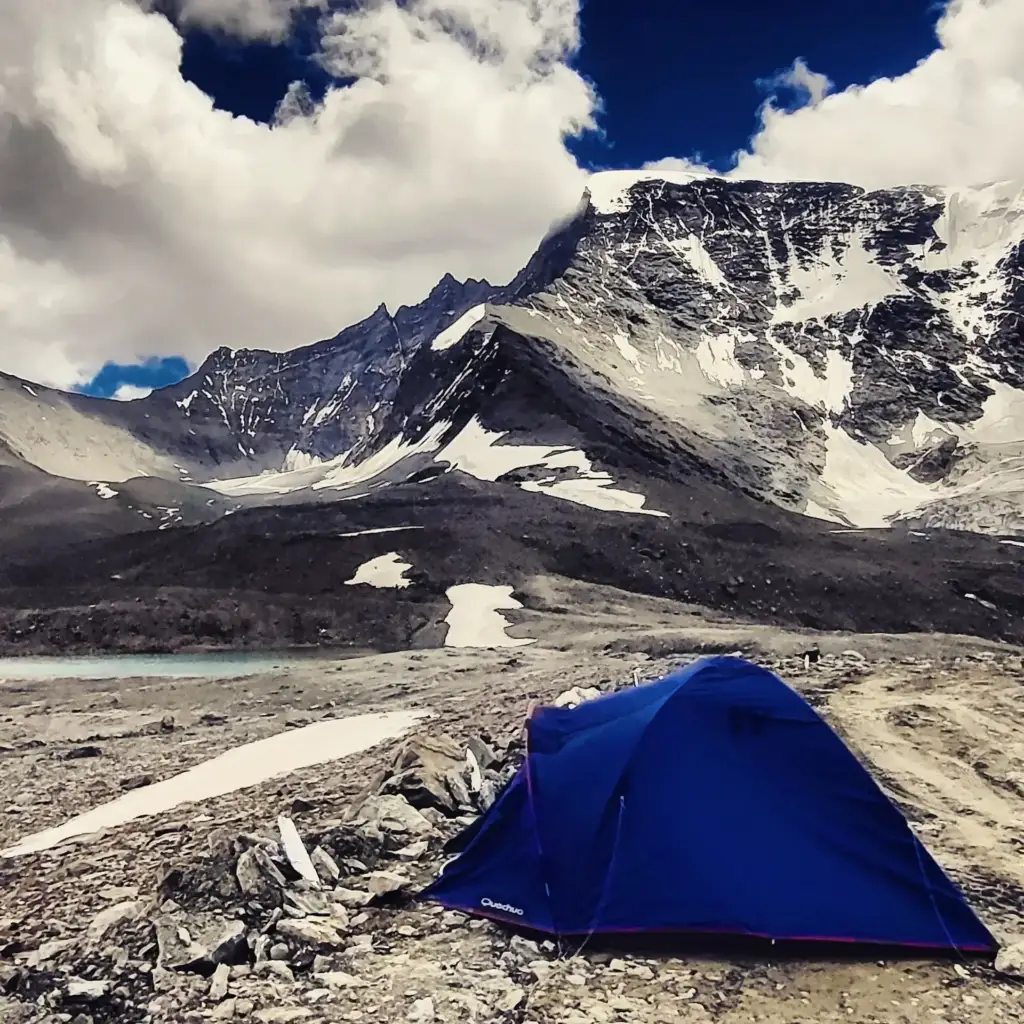
You walk up a broad valley with the stream beside you and peaks closing in. Balu Ka Ghera, a sandy camp at roughly 3,700 m, sits directly below the pass. Stay warm and sleep early.
Day 3: Cross Hampta Pass, descend to Shea Goru
The big day. An early start, a steady climb over moraine and snow, and you reach the pass at about 4,270 m with views of the Lahaul peaks. The descent on the far side is steep and can be icy early in the season. Camp at Shea Goru, around 3,850 m. Expect a long day of eight to nine hours.
Day 4: Shea Goru to Chatru, drive to Chandratal
A downhill walk along the valley brings you to Chatru on the Chandra river. From here the road leads towards Batal, where a branch road climbs to Chandratal. The drive from Chatru is roughly 50 km on rough roads. Evening at the lake if the road and weather allow.
Day 5: Chandratal to Manali via Atal Tunnel
Morning by the lake, then the drive back to Manali through the Atal Tunnel, and your onward journey.

The Chandratal extension
Chandratal sits at around 4,250 to 4,300 m in the Lahaul region. The road to it branches off the main highway near Batal and ends at a parking area, from where a short walk takes you to the shore. The lake is usually reachable from late May to early October, but road conditions decide everything. Landslides, stream crossings and early snow can close the route, so the Chandratal visit is always weather-permitting. Visitor rules and any entry charges at the lake are set locally and do change, so check before you go.
How difficult is the Hampta Pass trek?
Hampta Pass is rated moderate. The first two days are comfortable, gaining height gradually, which helps with acclimatisation. Pass day is the hard part: a long climb above 4,000 m, followed by a steep, sometimes slippery descent. You will also cross a few streams, which can be knee-deep and very cold, especially in the afternoon.
Who it suits: fit beginners who have done at least some hiking, and anyone who has done an easy trek like Triund or Beas Kund and wants a real step up.
How to prepare:
- Six to eight weeks of cardio, four or five days a week.
- Work towards running 5 km in about 35 minutes.
- Stair climbs and hill walks with a 7–8 kg backpack.
- Squats and lunges to protect your knees on the long descent.
At altitude, walk slowly, drink water often and report any headache, nausea or breathlessness to your trek leader early. Anyone with a medical condition should consult a doctor before signing up.
What to pack
- Trekking shoes with ankle support and good grip; floaters or sandals for stream crossings.
- Layers: two thermal sets, a fleece, and a padded or down jacket.
- Waterproof jacket and pants; July and August bring rain in the valley.
- Woollen cap, sun cap, gloves and three to four pairs of socks.
- UV sunglasses, sunscreen and lip balm.
- Head torch, two water bottles and a trekking pole.
- A 50–60 litre backpack with a rain cover, and a small daypack.
- Personal medicines and original government photo ID.
What affects the cost
We share a quote on enquiry, based on your group and plan. What moves the number:
- Where you start: Delhi with overnight Volvo, Chandigarh, or directly from Manali.
- Chandratal: the drive from Chatru to the lake and back to Manali adds vehicle costs.
- Group size: vehicles and guides are shared across the group.
- Stay before and after: an extra night in Manali is often worth it.
- Support: porters or mules for personal bags, and rental gear.
- Permits and fees as applicable at the time you travel.
Plan your Hampta Pass trek with Mountain’s Greet
Mountain’s Greet is a travel company born in Shimla, planning treks and holidays across India. Our Hampta Pass groups usually start in Delhi, travel overnight to Manali, and return the same way after Chandratal.
We plan for solo travellers on group departures, couples, families, friend groups, colleges and schools, and corporate teams. You trek with local guides and get a transparent written quote with inclusions and exclusions spelt out. Browse our other routes on the itinerary page, see real trip photos in the gallery, or send your dates on WhatsApp.
For general travel information on the state, the Himachal Tourism website is a useful reference.
FAQs
How high is Hampta Pass?
Hampta Pass is about 4,270 m, or roughly 14,000 ft. Some sources give a slightly higher figure of around 4,290 m.
Is the Hampta Pass trek good for beginners?
Yes, for fit beginners. The first two days are gentle, but pass day is long and steep, so train for six to eight weeks before you go.
Which is the best month for Hampta Pass?
July and August for green valleys and wildflowers, September for clear skies, and June if you want snow near the pass.
Is Chandratal always included?
We plan for it, but it depends on the road from Chatru and the weather. If the road is closed, the group returns to Manali directly.
How do I reach Manali from Chandigarh?
By bus or cab via Kiratpur, Bilaspur and Mandi. It is roughly 250 to 300 km and usually takes seven to nine hours.
Do I need any permits?
Carry original photo ID. Forest and local rules can change year to year, and your written quote from us states which permits and fees are included.
More guides

6 Best Treks Near Delhi for Beginners: Weekend to 5-Day Trips
Six beginner-friendly Himalayan treks you can do from Delhi, with how to reach each base, the best season and how hard they really are.
Read the guide →
Kedarkantha Trek Guide: Itinerary, Best Time, Difficulty and Packing
Everything you need for the Kedarkantha trek: getting to Sankri from Delhi, the 5-day route, snow season, difficulty, permits and what to pack.
Read the guide →
Valley of Flowers Trek Guide: Route, Bloom Season and Hemkund Sahib
Plan the Valley of Flowers trek: the Govindghat–Ghangaria route, peak bloom months, entry rules, Hemkund Sahib and how to get there from Delhi.
Read the guide →