
The Valley of Flowers trek takes you from Govindghat, near Joshimath in Uttarakhand, to the base village of Ghangaria and then into a national park where hundreds of alpine flowers bloom between July and early September. It is an easy-moderate trek of about six days from Delhi, and you can add a day for Hemkund Sahib.
This guide explains the route, the bloom season, entry rules, the Hemkund option and how to reach Govindghat from Delhi and Rishikesh.
Valley of Flowers quick facts
| Detail | Information |
|---|---|
| Location | Chamoli district, Uttarakhand |
| Status | National park; part of the Nanda Devi and Valley of Flowers UNESCO World Heritage Site |
| Altitude of the valley | Roughly 3,350 m to 3,660 m |
| Route | Govindghat → Pulna (by road) → Ghangaria (trek) → Valley of Flowers (day visits) |
| Park season | Usually 1 June to 31 October |
| Best time for flowers | July to early September |
| Difficulty | Easy-moderate |
| Duration | 6 days from Rishikesh, with an optional Hemkund Sahib day |
Why visit the Valley of Flowers
For a few weeks each monsoon, a glacial valley high in the Garhwal Himalaya fills with colour. Blue poppies, primulas, geraniums, balsams, potentillas and many other species cover the slopes, with waterfalls and snowfields in the background. The valley is protected as a national park and, together with Nanda Devi National Park, is a UNESCO World Heritage Site.
It is also one of the few high-altitude treks where you sleep in a village with guesthouses rather than tents, which makes it popular with families, couples and first-time trekkers.
Best time: understanding the bloom season
The park usually opens on 1 June and closes at the end of October, but flowers do not bloom evenly across those months.
- June: snow is still melting. Early flowers appear, but the valley is not yet at its best.
- July to mid-August: peak bloom. The widest variety of flowers, and the greenest slopes. This is also monsoon, so expect rain most days and possible road delays.
- Late August to early September: still very good. Some species fade, others take over, and the weather often starts to clear.
- Late September and October: the flowers are mostly over and the valley turns golden-brown.
Our Valley of Flowers departures run from July to September, timed for the bloom.
How to reach Govindghat from Delhi and Rishikesh
Govindghat sits on the Badrinath highway, about 21 km beyond Joshimath.
- Delhi to Rishikesh or Haridwar: travel overnight by Volvo, train or cab. Dehradun’s Jolly Grant Airport is the nearest airport.
- Rishikesh to Joshimath: about 250 km along the Ganga and Alaknanda, passing Devprayag, Rudraprayag and Chamoli. It is a full day’s drive, often longer in monsoon.
- Joshimath to Govindghat: about 21 km, less than an hour by road.
- Govindghat to Pulna: about 4 km by shared taxi or vehicle. The trek to Ghangaria begins here.
A helicopter service between Govindghat and Ghangaria operates in season for those who cannot walk the full distance, subject to weather.

Valley of Flowers trek itinerary: day by day
This is the plan we follow. Monsoon weather can change the order of days, so we keep a little flexibility.
Day 1: Drive to Govindghat via Rishikesh and Joshimath
A long mountain drive past the river confluences to Govindghat. The first sight of the Alaknanda gorge sets the tone for the trip.
Day 2: Govindghat to Ghangaria
Drive the short stretch to Pulna, then trek roughly 9 to 10 km along the Laxman Ganga to Ghangaria (about 3,050 m). The path is wide and well made, but it climbs steadily. Mules and porters are available for those who want help with bags.
Day 3: Ghangaria to the Valley of Flowers and back
After breakfast, walk to the forest check post, register, and continue about 3 to 4 km into the valley. Spend the day walking the trails, crossing streams and stopping for the flowers. Everyone must return to Ghangaria the same day.
Day 4: Hemkund Sahib, or a second day in the valley
Either climb to Hemkund Sahib or return to the valley to go deeper towards the far end of the trail. Many people who have come for the flowers choose a second valley day.
Day 5: Ghangaria to Govindghat, drive to Joshimath
Walk down to Pulna, drive to Govindghat, and continue to Joshimath for the night.
Day 6: Joshimath and onward journey
Drive back towards Rishikesh for your onward travel to Delhi or home.
Entry rules, permits and fees
The Valley of Flowers is managed by the Uttarakhand Forest Department and the rules are strict:
- Day visits only. No overnight stay or camping is allowed inside the park. You stay in Ghangaria.
- Entry permit. A permit is issued at the forest check post above Ghangaria, and in recent seasons the department has also offered online registration before arrival. The permit is typically valid for three days of entry.
- Entry fee. In the 2025 and 2026 seasons the fee was widely reported as ₹200 for Indian citizens and ₹800 for foreign nationals. Fees and timings can be revised, so confirm before you travel.
- Timings. Entry is allowed from the morning until early afternoon, and visitors must be out of the park by evening.
- No mules inside. Pack animals are not allowed into the valley itself.
- Carry original government photo ID, and do not pick flowers or leave any waste.
The Hemkund Sahib option
Hemkund Sahib is a Sikh gurdwara beside a glacial lake, above 4,300 m. It is reached by a steep, stone-paved path of about 6 km from Ghangaria, with a climb of over 1,000 m. It is one of the highest gurdwaras in the world and a major pilgrimage, usually open from late May until early October.
Keep these points in mind:
- Registration for the Hemkund Sahib yatra is mandatory. You can register through the Uttarakhand government’s tourist registration portal.
- No overnight stay is allowed at Hemkund, so pilgrims start early and leave by early afternoon.
- The steep climb to such a height is harder than the valley walk. Go slowly, and turn back if you feel unwell.
Difficulty and fitness
The Valley of Flowers trek is rated easy-moderate. The day from Pulna to Ghangaria is the longest, with a steady climb on a paved path. The valley walk itself is gentler but involves uneven, sometimes wet trails and small stream crossings. Hemkund is the toughest day of all because of the altitude gain.
Prepare with four to six weeks of brisk walking, stair climbing or jogging. Rain gear matters more here than on almost any other trek: you will walk in rain on most days in July and August.
What to pack
- Waterproof trekking shoes with good grip; the paths are wet and slippery in monsoon.
- A proper rain jacket and rain pants, or a good poncho, plus a backpack rain cover.
- Quick-dry clothes, a fleece and a light padded jacket for Ghangaria evenings.
- Plastic or dry bags to keep clothes and electronics dry.
- Walking pole, water bottle, sunscreen and a cap.
- Personal medicines, including anything for motion sickness on the long drive.
- Original photo ID for permits and Hemkund registration.
What affects the cost
Every trip is quoted on enquiry. The main factors are:
- Starting point: Delhi, Haridwar or Rishikesh.
- Vehicle type for the long drive, and group size.
- Guesthouse category in Joshimath and Ghangaria.
- Whether you add Hemkund or a second valley day.
- Mules, porters or a helicopter seat for the Ghangaria leg.
- Park entry fees as applicable when you travel.
Plan it with Mountain’s Greet
Mountain’s Greet is a travel company born in Shimla that plans treks and trips across India. For the Valley of Flowers, groups usually travel from Delhi to Rishikesh and continue by road to Govindghat.
We plan for solo travellers on group departures, couples, families, friends, colleges and schools, corporate teams, and pilgrimage and senior groups who want to include Hemkund Sahib at a comfortable pace. You get local guides, homely stays and a written quote that lists inclusions and exclusions. See all our routes on the itinerary page, read about us, or message us on WhatsApp.
FAQs
When is the Valley of Flowers open?
The park usually opens on 1 June and closes on 31 October. The best flowers are from July to early September.
Can I stay overnight inside the Valley of Flowers?
No. Only day visits are allowed. Visitors stay in Ghangaria and walk into the valley each morning.
How long is the trek from Govindghat to Ghangaria?
After a 4 km road stretch from Govindghat to Pulna, it is roughly 9 to 10 km on foot to Ghangaria, usually five to seven hours.
Is registration needed for Hemkund Sahib?
Yes. Registration for the Hemkund Sahib yatra is mandatory and can be done on the Uttarakhand government’s tourist registration portal.
Is the Valley of Flowers trek suitable for beginners and families?
Yes. It is easy-moderate, uses guesthouses instead of tents, and has mules and porters available. Just prepare for rain and a steady climb to Ghangaria.
What is the entry fee for the Valley of Flowers?
It was reported as ₹200 for Indian citizens and ₹800 for foreign nationals in the 2025 and 2026 seasons. Check the current fee with the forest department before you go.
More guides

6 Best Treks Near Delhi for Beginners: Weekend to 5-Day Trips
Six beginner-friendly Himalayan treks you can do from Delhi, with how to reach each base, the best season and how hard they really are.
Read the guide →
Kedarkantha Trek Guide: Itinerary, Best Time, Difficulty and Packing
Everything you need for the Kedarkantha trek: getting to Sankri from Delhi, the 5-day route, snow season, difficulty, permits and what to pack.
Read the guide →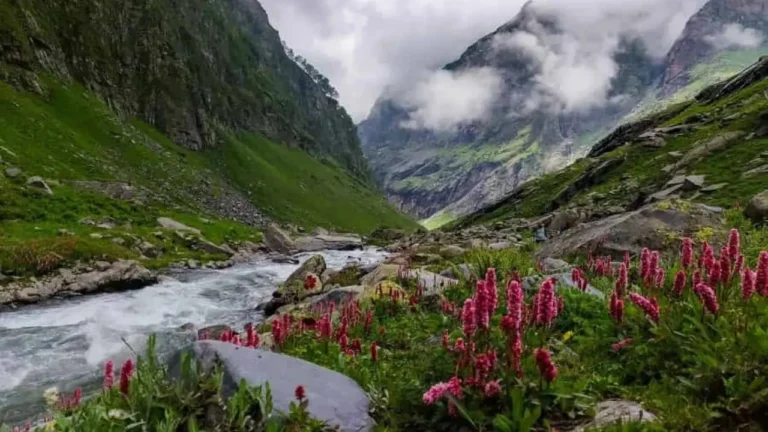
Hampta Pass Trek Guide: Manali Route, Chandratal and Best Months
Cross from green Kullu into stark Lahaul on the Hampta Pass trek. Route, Chandratal, best months, difficulty and how to reach Manali.
Read the guide →